Visibility is not verification
Vehicle location is valuable evidence, but it does not by itself establish whether the approved municipal service obligation was fulfilled.
From fleet visibility to evidence-backed municipal control.
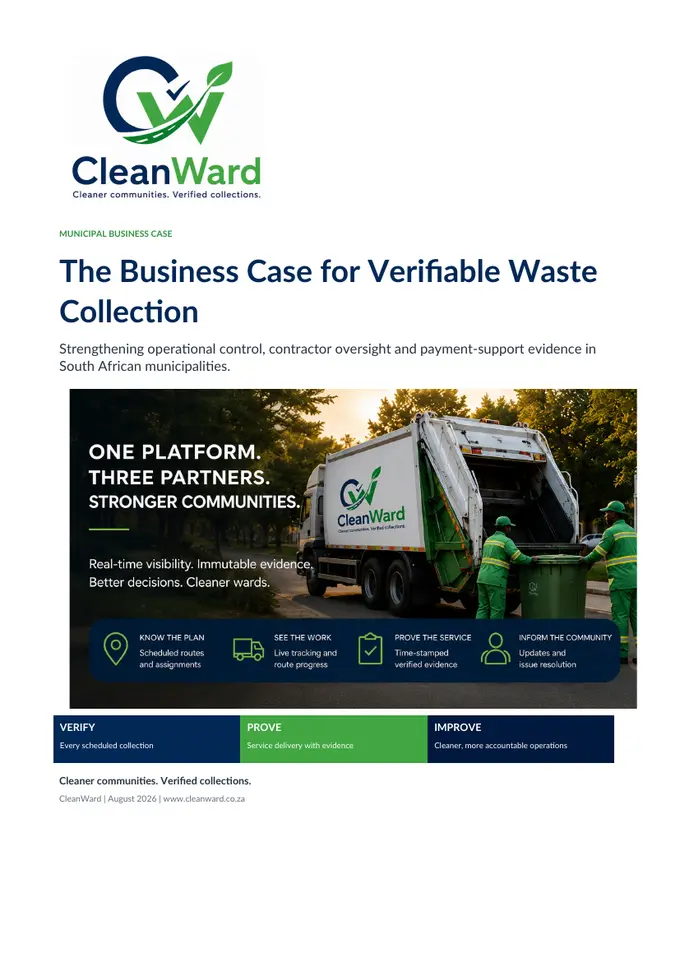
Waste collection generates substantial operational data, yet municipalities can still struggle to connect the approved service plan to what happened on the ground, why services varied, what was verified and what evidence supports subsequent action.
This business case examines the operational, contractual, financial and governance case for Municipal Waste Service Assurance. It sets out a practical path from fragmented records and fleet visibility to a measurable, evidence-backed municipal control environment.
How can a municipality connect its approved service obligation to actual route execution?
What evidence should support contractor oversight and billing-period review?
How should operational evidence remain separate from an authorised municipal decision?
Which pilot measures show whether service assurance is creating value?
Vehicle location is valuable evidence, but it does not by itself establish whether the approved municipal service obligation was fulfilled.
Route traces become decision-useful when connected to schedules, wards, contracts, approved vehicles, exceptions and field records.
The system can organise evidence and preserve provenance; authorised municipal officials retain the verification and administrative decision.
A focused pilot can test evidence completeness, verification turnaround, exception capture, ward coverage and reporting effort before wider scale.
CleanWard applies these principles through a phased, role-controlled approach designed around municipal operating realities.
Download the branded PDF or speak with CleanWard about applying the framework to your municipal context.